

If you’re struggling with belly fat during menopause, you’re not alone. One of the most common things I hear from women is:
For many women, the changes that happen during menopause can feel frustrating, discouraging, and confusing. The good news is that there are ways to improve your health, support your hormones, and reduce menopausal belly fat naturally and safely.
The key is understanding why this happens and focusing on the right strategies instead of chasing quick fixes.
During menopause, several hormonal and metabolic changes happen in the body at the same time.
Metabolism naturally slows down, sometimes by 10–15%. Insulin resistance can worsen, muscle mass often decreases, and stress hormones like cortisol may increase. Hormonal shifts can also change where the body stores fat, causing more weight to collect around the midsection.
This is why many women notice:
These changes are very real, and they are not simply caused by a lack of willpower.
Yes! But it’s important to have realistic expectations.
You may not feel exactly like you did in your 20s or 30s, and you may not suddenly regain “six-pack abs.” However, with the right combination of nutrition, exercise, lifestyle changes, and hormone support when appropriate, many women can see significant improvements in both their health and body composition.
The goal should not be perfection. The goal should be:
One of the most important things women can do during menopause is resistance training.
As muscle mass decreases with age, metabolism tends to slow down as well. Strength training helps:
This does not mean you have to become a bodybuilder. Even consistent resistance training a few times per week can make a major difference over time.
One common mistake I see is an overreliance on cardio without incorporating strength training. While cardio has benefits, muscle-building exercises are incredibly important during this stage of life.
Nutrition matters, but extreme dieting is often not the answer.
In fact, one of the biggest mistakes I see women make is simply not eating enough. Chronic under-eating can work against the body by slowing metabolism even further and making it harder to maintain muscle mass.
Instead, focus on:
Aiming for approximately 25 grams of fiber daily may help support digestion, fullness, and metabolic health.
Sleep, stress, and hormones are all closely connected.
When these areas are out of balance, they can contribute to:
Higher cortisol levels from chronic stress can make belly fat more difficult to lose. Poor sleep can also affect hunger hormones, recovery, and insulin sensitivity.
This is why a healthy lifestyle needs to include more than just diet and exercise.
Sometimes lifestyle changes alone are not enough.
If you feel like your body has significantly changed in your late 30s, 40s, or 50s, it may be worth speaking with a medical professional who specializes in hormone therapy and overall wellness.
Hormonal imbalances can contribute to:
For some women, treatments like hormone replacement therapy (HRT) or GLP-1 medications may be appropriate. However, these treatments are not one-size-fits-all solutions and should always be discussed with a qualified medical provider. If you're considering these options, then read more here how HRT and GLP-1 can help get rid of menopausal belly fat.
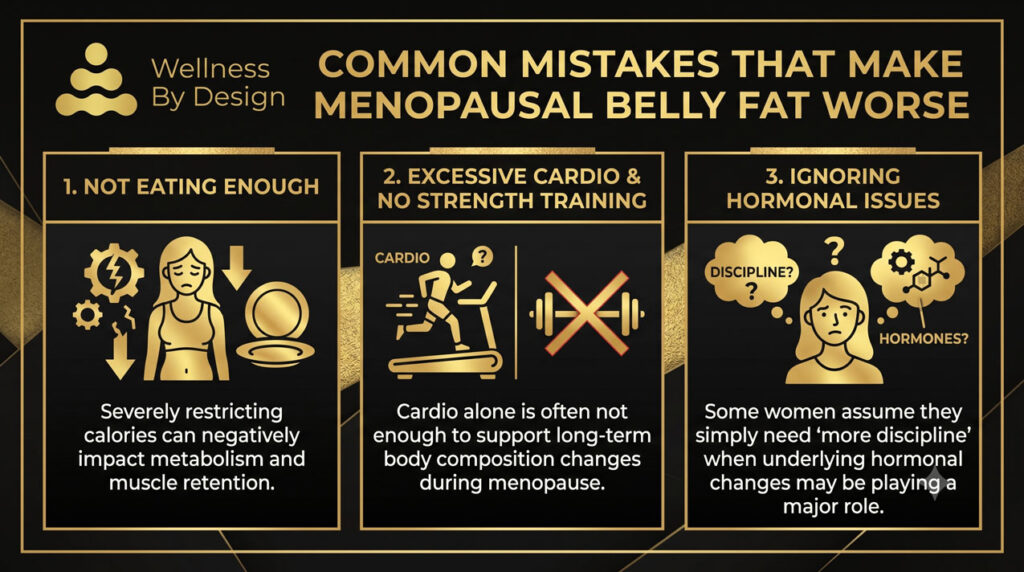
There are several common habits that can unintentionally make belly fat harder to lose:
Severely restricting calories can negatively impact metabolism and muscle retention.
Cardio alone is often not enough to support long-term body composition changes during menopause.
Some women assume they simply need “more discipline” when underlying hormonal changes may be playing a major role.
If you feel overwhelmed, start with these basics:
Small, sustainable changes often create the best long-term results.
If you’re struggling with menopausal belly fat, please know this:
You do not have to suffer through it alone.
There are real treatment options, real strategies, and real support available. With the right guidance, many women are able to feel stronger, healthier, and more confident again.
Progress may not happen overnight, but positive change is possible, and you deserve to feel good in your body again.
